Which of the Following Statements Best Describes Gluconeogenesis
Which statement best describes the differences between the characteristics of type 1 and type 2 diabetes. Which of the following best describes dextrans.
Gluconeogenesis Steps Enzymes Regulation Tuscany Diet
Fructose is phosphorylated and cleaved to triose phosphates which cannot be used for gluconeogenesis.
. C A phosphate group is attached to a protein changing its activity. Derived only from legumes and other plant material b. Gycosidic branches can be 12 13 or 14 A linear glucan.
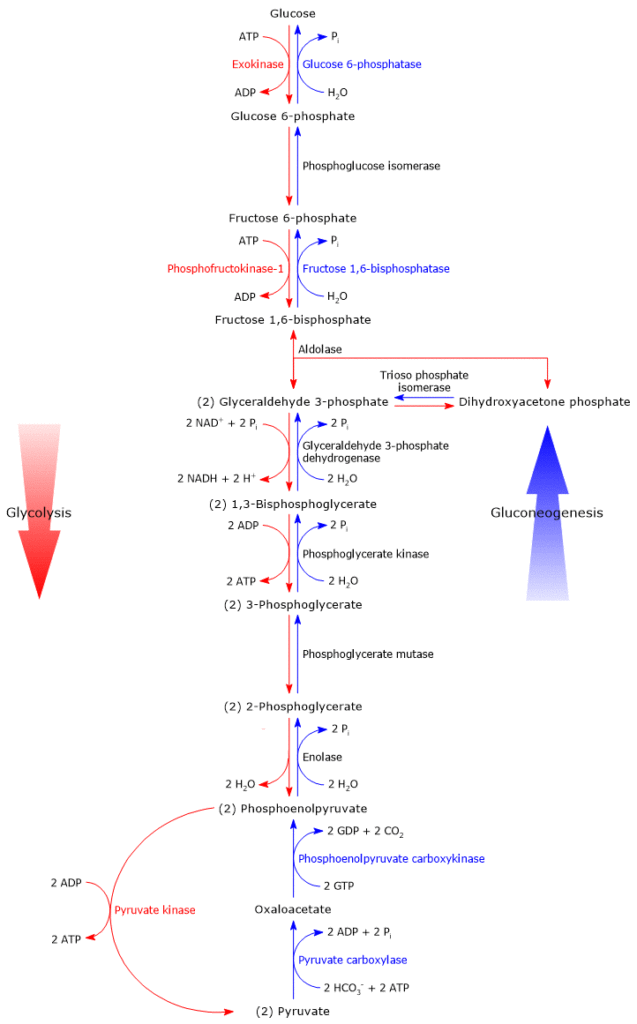
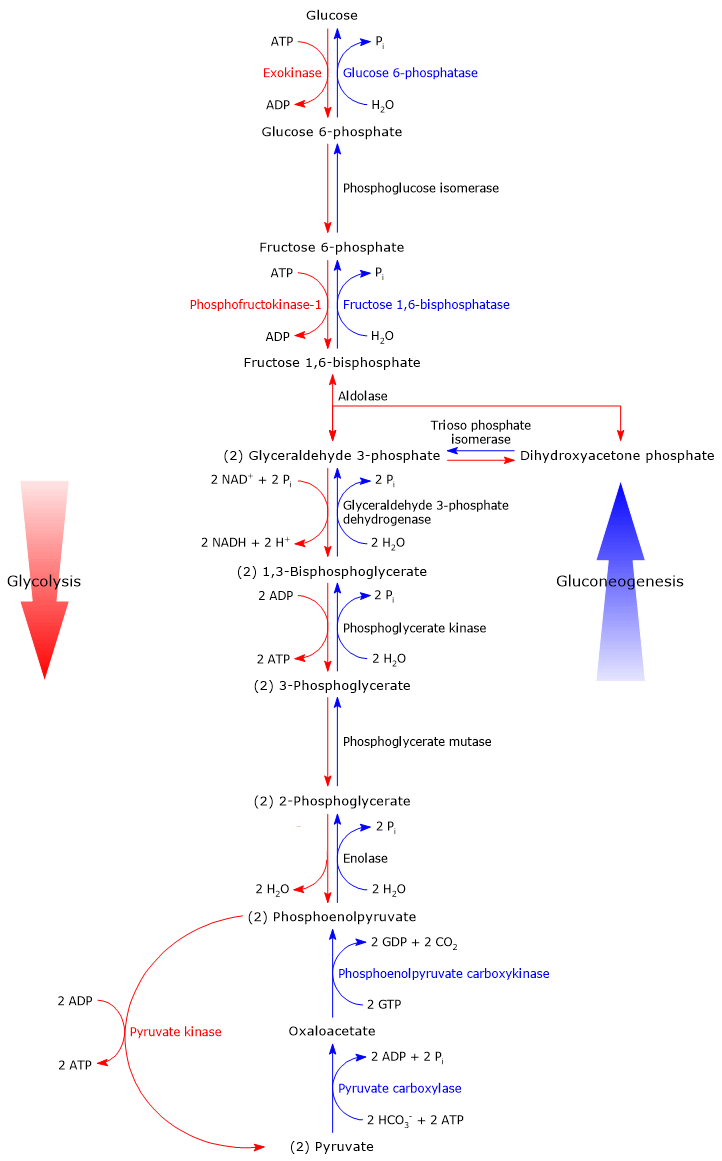
A Fructose 16-bisphosphatase is activated by fructose 26-bisphosphate. C The conversion of fructose 16-bisphosphate to. C Glucagon inhibits this pathway.
Science Biochemistry QA Library Which of the following statements isare TRUE about the metabolic states of the body. A Acetyl CoA carboxylase attaches CoA to the free fatty acid to make molecule A. The following two questions refer to the pathway drawn above.
Glycogen is a copolymer of glucose and galactose. Gluconeogenesis is the conversion of protein molecules like amino acid and lactic into glucose required in cells due to absence of carbohydrate molecules. Gluconeogenesis occurs during ketosis because during the ketosis the amount of carbohydrate molecules present in consumed foods is very little.
In humans which one of the following statements about gluconeogenesis is True. B Glucagon stimulates phosphofructokinase 2 and inhibits fructose 26-bisphosphatase. Lactose will give positive test using phenylhydrazine test and forms a needle shaped osazone.
QUESTION 3 This is the storage form of glucose in the body. 6 Which of the following statements about gluconeogenesis in animal cells is true. Both are catabolic 22.
Which statement concerning the glycolytic and gluconeogenic pathways is correct. Gluconeogenesis is catabolic and glycolysis is anabolic D. A A rise in the cellular level of fructose-26-bisphosphate stimulates the rate of gluconeogenesis.
- Insulin This condition results form a diet that is chronically too low in carbohydrate. Gluconeogenesis is anabolic and glycolysis is catabolic B. B The enzymes that catalyze reactions 1 and 3 require FAD and NAD respectively.
D Estimation of food intake among healthy individuals. Consists of a linear chain of hundreds to thousands of β 14 linked D-glucose units. It is stored in liver and muscle tissue.
Insulin is secreted in response to high blood glucose levels during the fed state. The synthesis of glucose from amino acids The digestion of polysaccharides to free glucose The movement of glucose into body cells. Starch Glucose Glycogen QUESTION 4 Which of the following statements best describes gluconeogenesis.
Which of the following best describes the function of the glycogen debranching enzyme in glycogenolysis. - Carbohydrate This hormone acts to move glucose out of the bloodstream and into body cells. A persons with type 2 diabetes usually require lower doses of insulin than person with type 1 diabetes because they have a milder form of diabetes.
A In the presence of oxygen nutrients are broken down to form carbon dioxide water and ATP. The main linkage between glucose units is α14. 25 Which of the following statements describing the above pathway is correct.
Lactose will quickly less than 3 minutes form a thin brick red precipitate in a Barfoeds test since it is a reducing monosaccharide. 8 Which of the following statements describes cellular respiration. There are more branch residues than residues in straight chains.
Which of the following statements best describes gluconeogenesis. A A modulator molecule loosely binds to a protein altering its activity. Which of the following statements best describes the structure of glycogen.
The basic unit of collagen is tropocollagen a triple helix of three polypeptide chain 3. 13 Glycolysis and gluconeogenesis are reciprocally regulated. Which of the following statements below gives an accurate description of collagen.
Meets all the minimum daily requirements for a healthy diet. Which of the following statements best describe testing of lactose sample. It cleaves 16 branch points releasing glucose-6-phosphate.
B An animal fed a large excess of fat in the diet will convert any fat not needed for energy production into glycogen to be stored for later use. Derived from meat and fish only c. Which of the following statements best describes allosteric regulation.
B Rate of protein synthesis is changed by binding of a regulator molecule to the promoter sequence. It is a fibrous protein 2. Which of the following statements best describes complete protein.
- The synthesis of glucose from amino acids This is the preferred fuel for the brain. A All glands are encapsulated by deep fascia B Deep fascia consists mostly of collagen type II C Deep fascia contains more fat in females than males D Deep fascia separates and compartmentalizes individual muscles and groups of muscles E There are no blood vessels in deep fascia 122. It cleaves 16 branch points releasing glucose-1-phosphate.
Vitamin A is important in catalyzing the hydroxylation of proline 4. Which of the following protein synthesis inhibitors is NOT correctly paired. Which of the following best describes gluconeogenesis-creation of glycogen from glucose-breakdown of glycogen into glucose-conversion of glucose to fat-synthesis of glucose from noncarbohydrate sources.
Which one of the following statements best describes deep fascia. Both are anabolic C. Must contain all the bodys amino acid requirements for tissue maintenance and growth d.
During prolonged starvation the brain relies on fatty acids as fuel. Which of the following correctly describes the mechanism of this regulation. B The metabolic pathway uses the energy from ATP to form smaller molecules.
Gluconeogenesis Steps Enzymes Regulation Tuscany Diet

Chapter 17 Gluconeogenesis Diagram Quizlet

Gluconeogenesis Synthesis Of New Glucose Biochemistry Pharmacology Nursing Medical Assistant Student
Comments
Post a Comment